
Learn More!
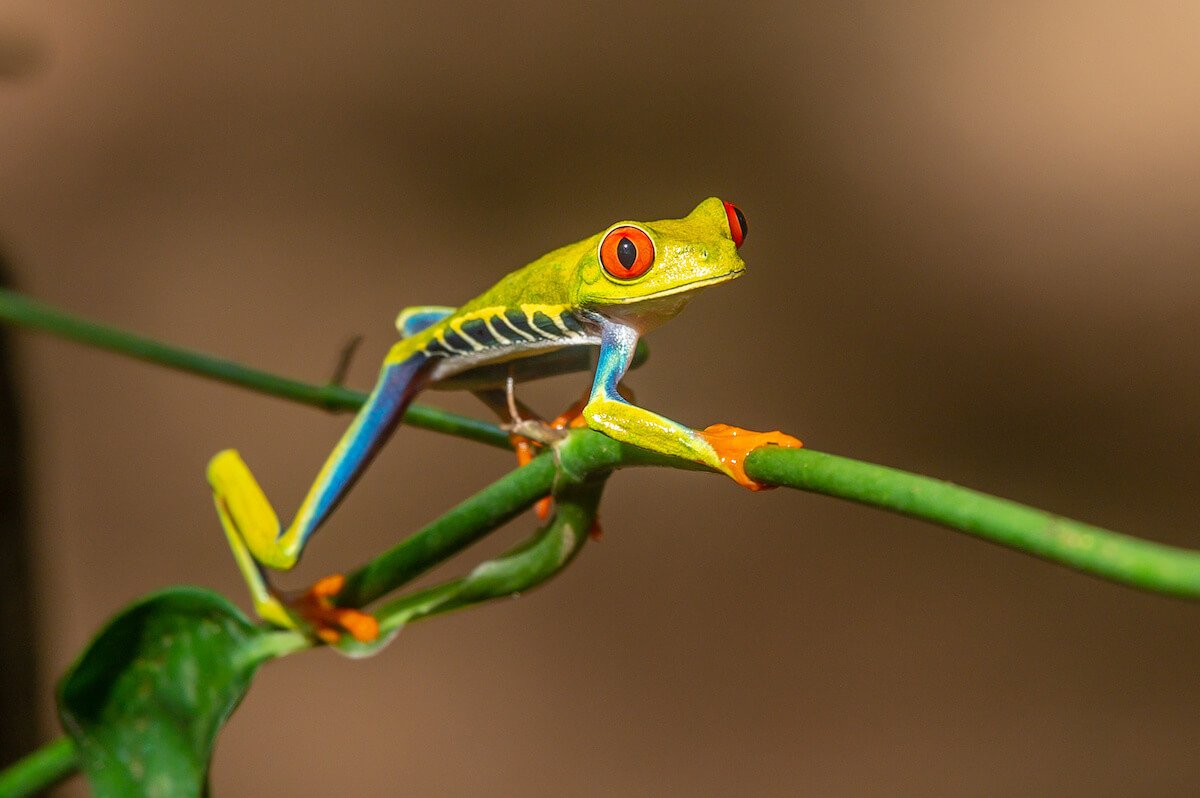
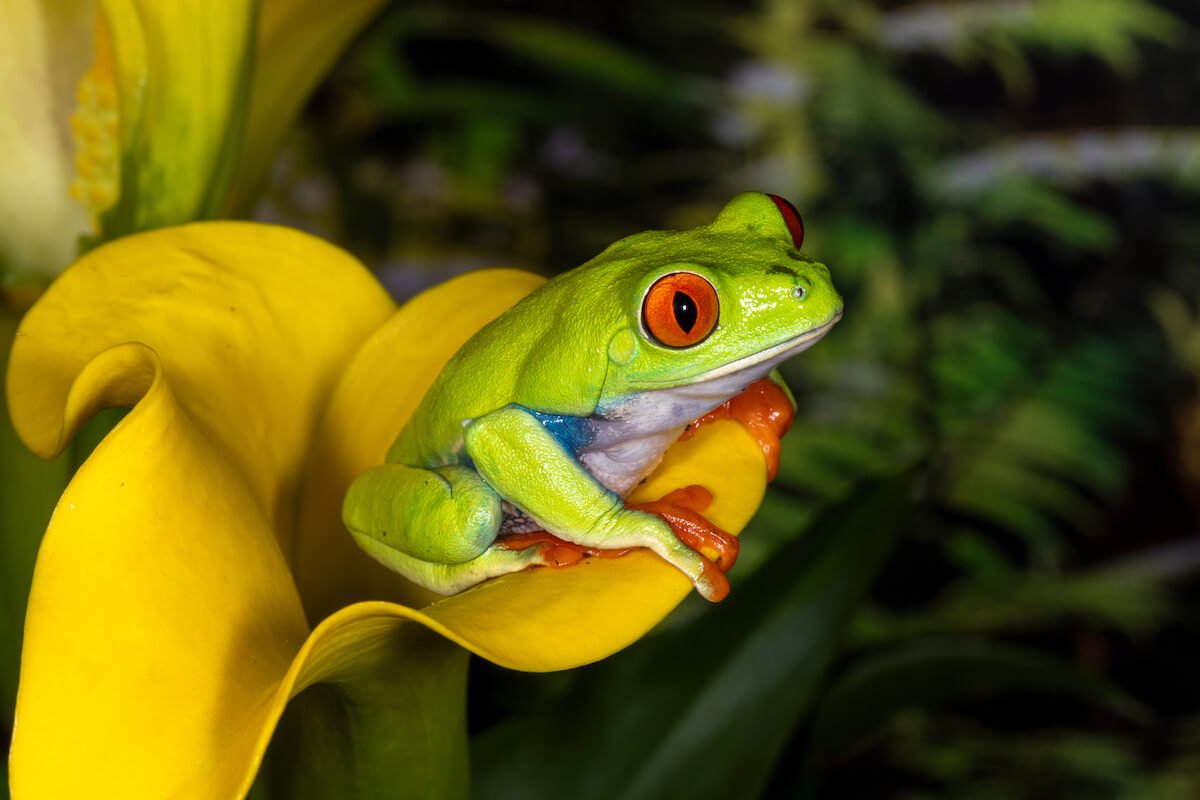
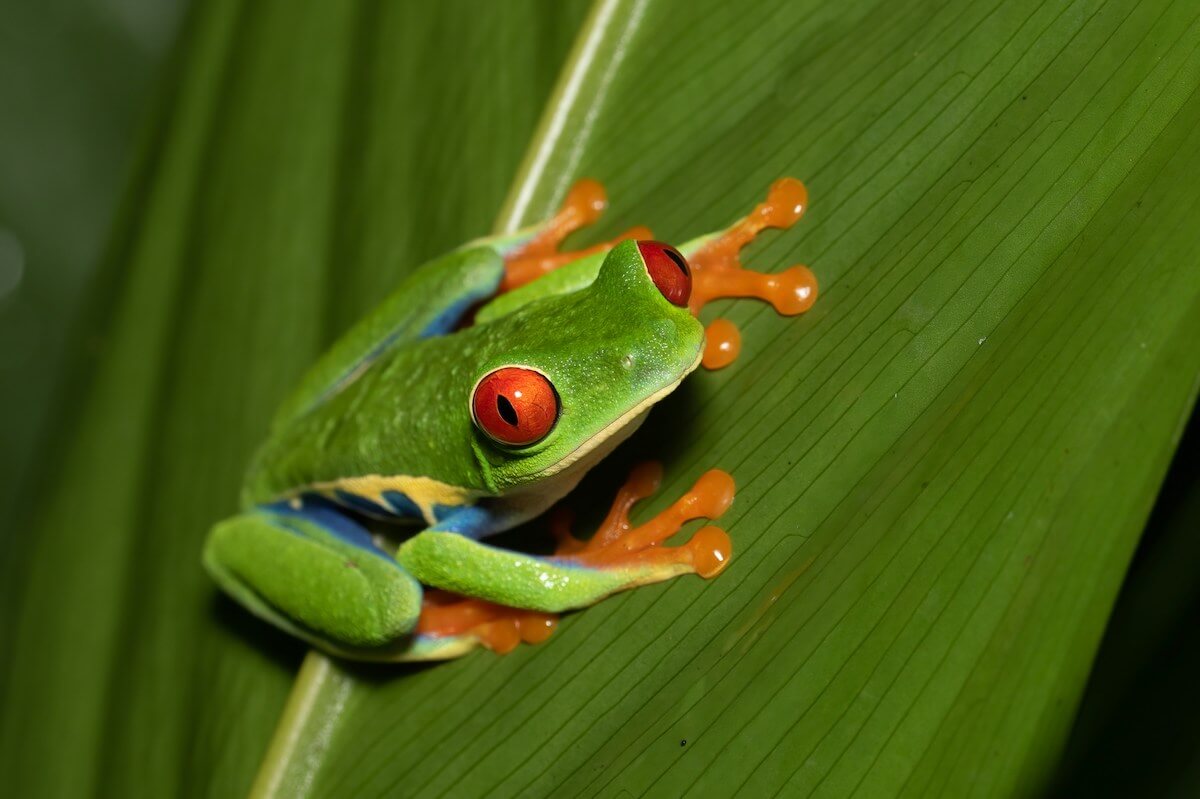
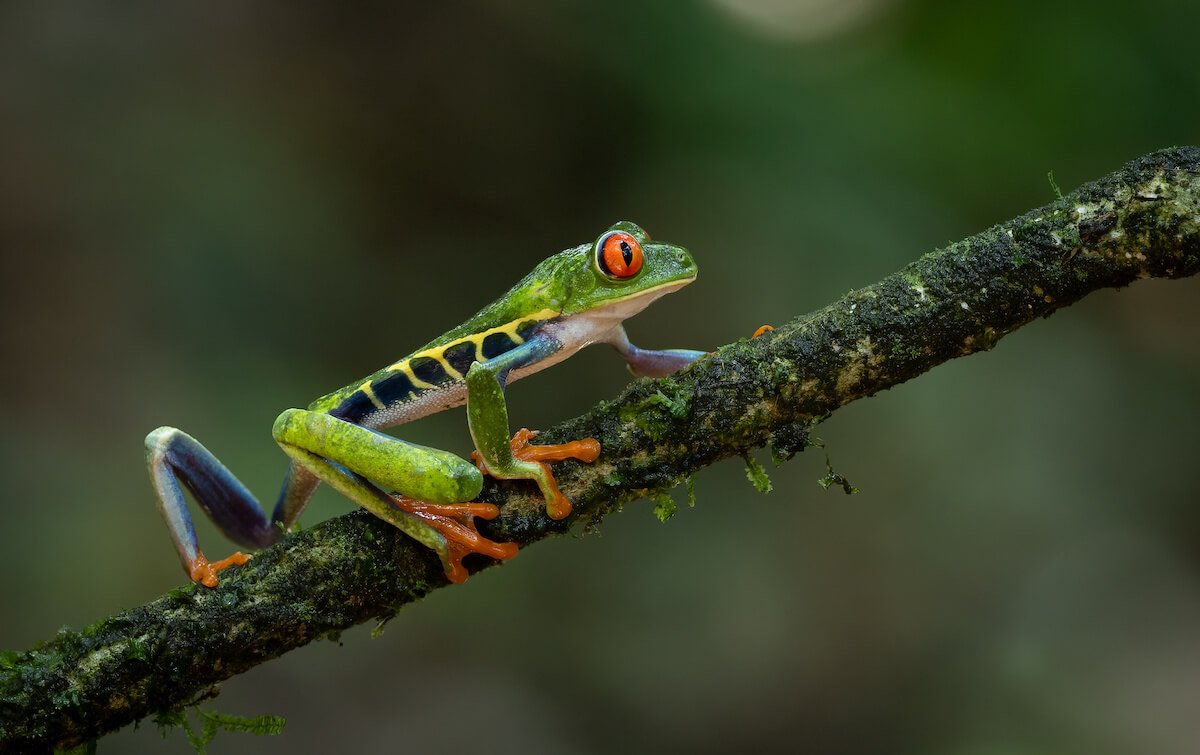
The red-eyed tree frog (Agalychnis callidryas) is a vibrant and captivating amphibian native to the tropical rainforests of Central America. This species is best known for its striking appearance: bright green body, blue and yellow flanks, orange feet, and of course, its signature red eyes. These vivid colors serve as a defense mechanism, startling predators when the frog suddenly opens its eyes. During the day, the red-eyed tree frog remains mostly hidden, resting on the undersides of leaves with its eyes closed and limbs tucked in to blend seamlessly with the foliage.
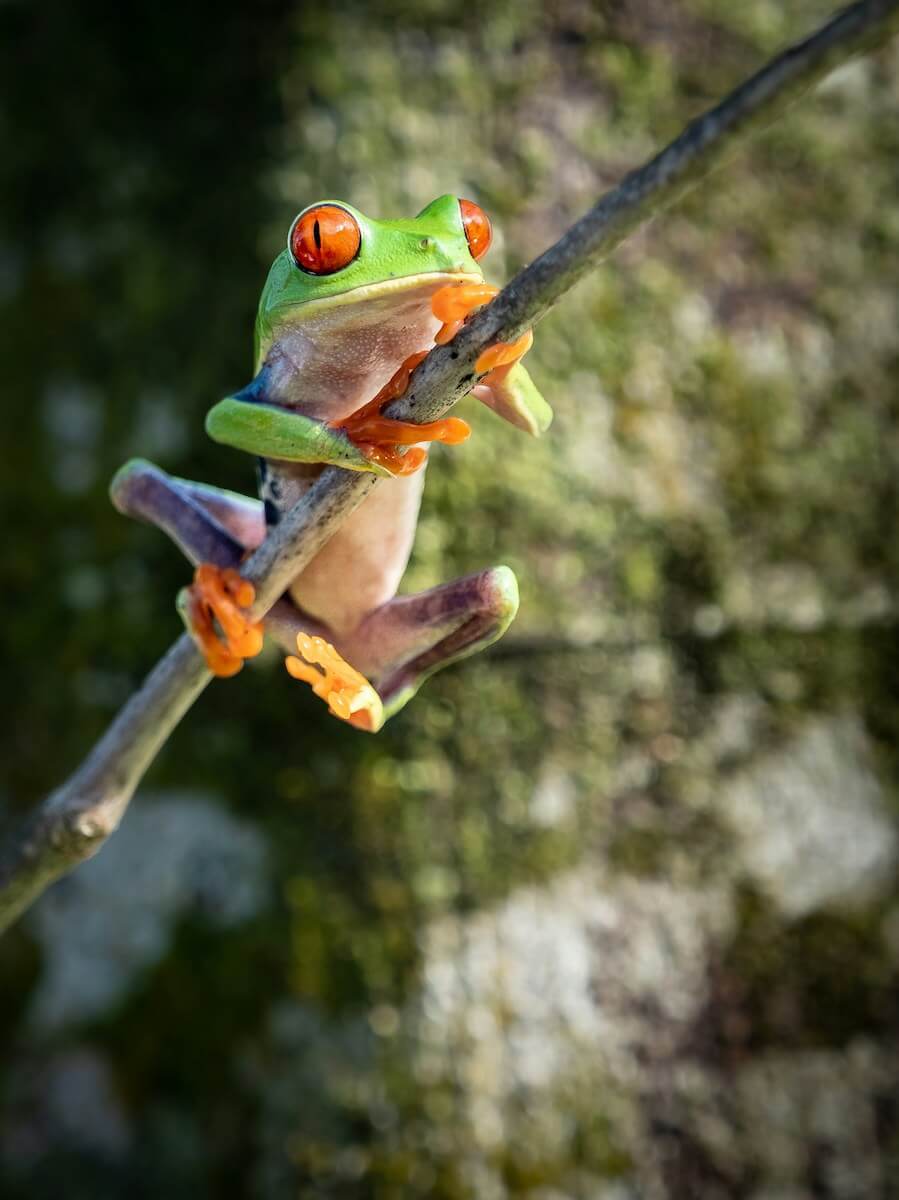
At night, the red-eyed tree frog becomes active, hunting for insects and other small invertebrates. Their long, sticky toes allow them to expertly navigate the forest canopy, leaping from leaf to leaf in search of food. This arboreal lifestyle is complemented by their excellent night vision, which is essential for spotting prey in the dark. Mating season brings about a fascinating display of vocalizations and behaviors, as males call out to attract females and engage in competitive displays to secure mates. The females lay their eggs on the undersides of leaves overhanging water, ensuring that the tadpoles can drop into the water below once they hatch.
Despite their dazzling appearance, red-eyed tree frogs face numerous threats in the wild. Habitat loss due to deforestation and climate change poses significant risks to their populations. However, they are currently classified as “Least Concern” by the IUCN due to their wide distribution and presumed large population. Conservation efforts continue to focus on preserving their natural habitats and mitigating the impacts of human activities. The red-eyed tree frog remains a symbol of the rich biodiversity of Central America’s rainforests and a popular subject of fascination for scientists and nature enthusiasts alike.