Learn More!
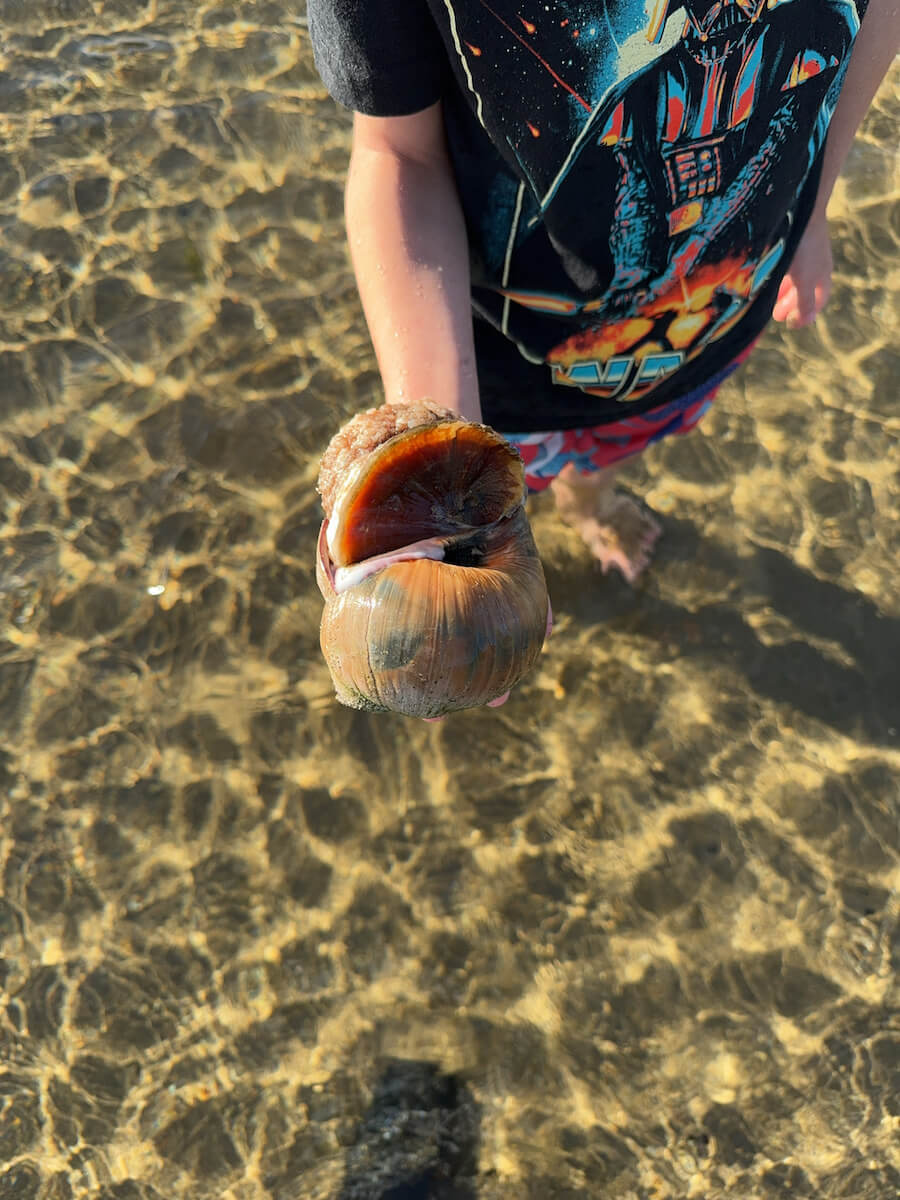
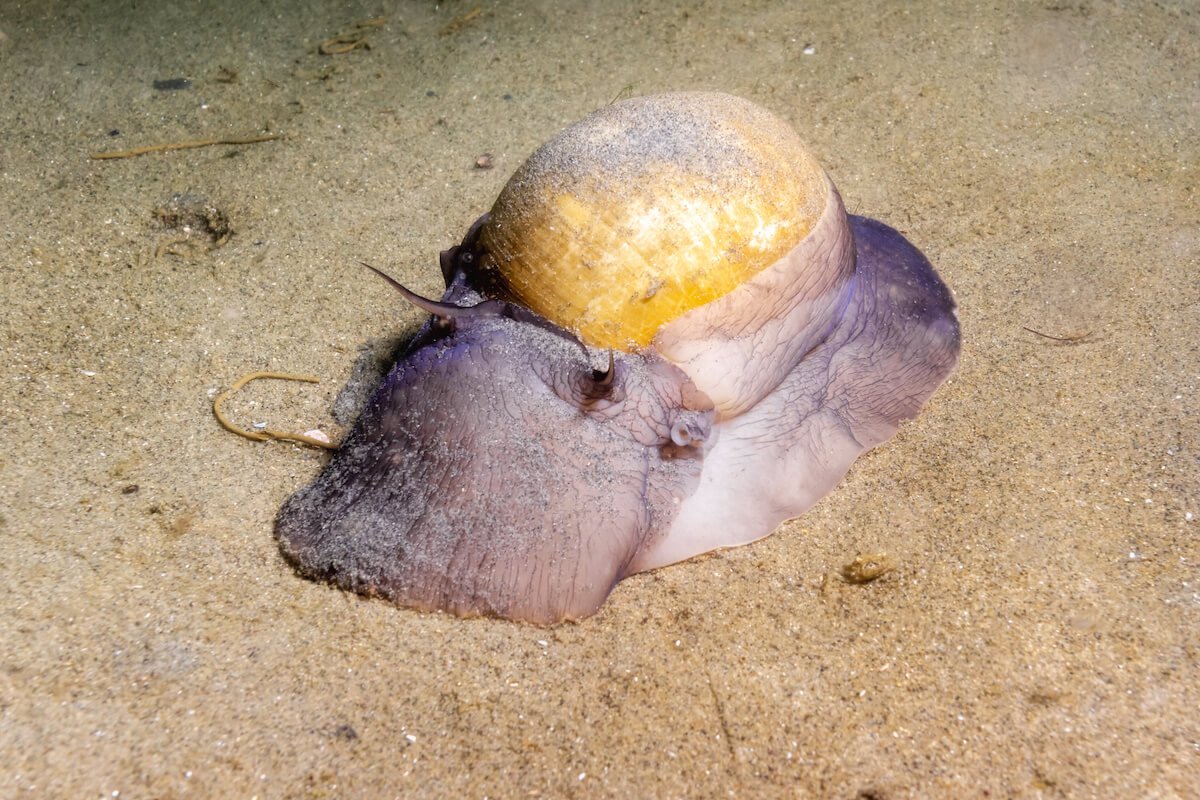
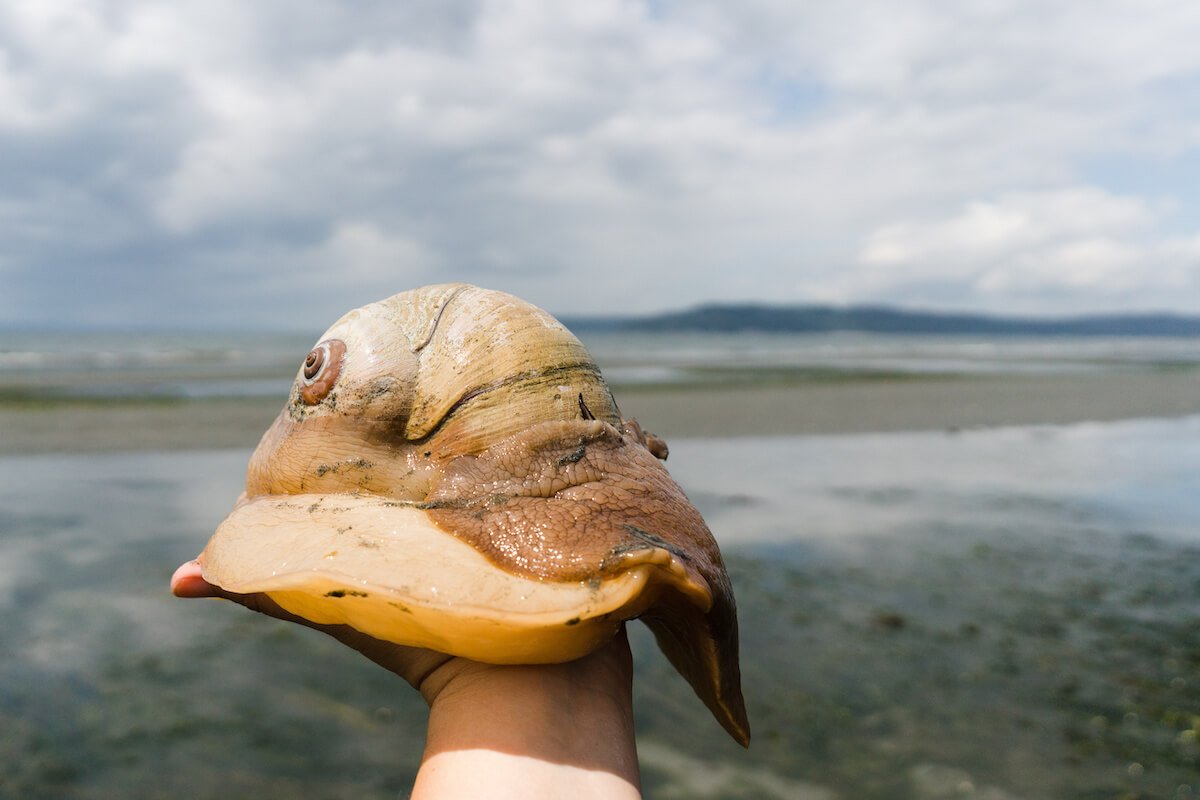
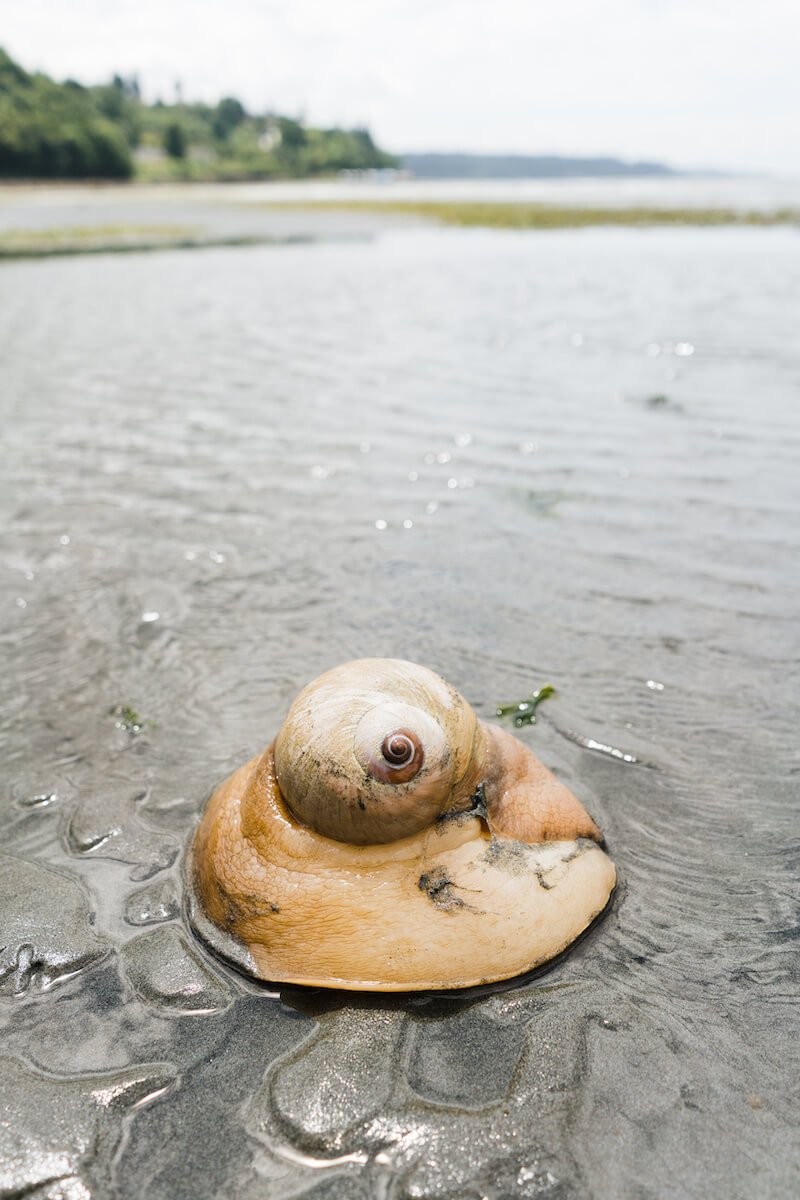
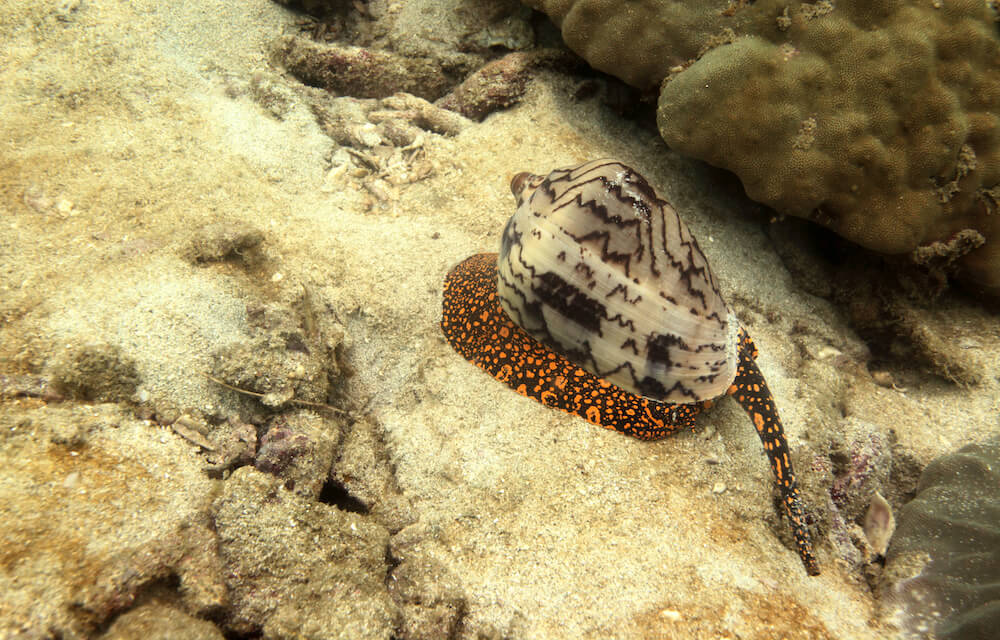
The moon snail, belonging to the family Naticidae, is a fascinating marine gastropod known for its large, smooth, and rounded shell that resembles the shape of a moon. These snails are often found in sandy or muddy substrates of coastal waters, where they spend much of their time burrowing beneath the surface. One of the most commonly recognized species is Neverita duplicata, also known as the shark eye or Atlantic moon snail.
Moon snails are predatory, unlike many of their herbivorous snail relatives. They hunt for bivalves (like clams) and other snails by using their muscular foot to burrow into the sand and locate their prey. Once they find a suitable prey, they use a specialized organ called a radula, which acts like a tiny drill, to bore a perfectly round hole into the shell of their victim. They then secrete digestive enzymes to liquefy the soft tissues inside and suck out the nutritious contents, leaving behind an empty shell with a neat, circular hole.
One of the unique features of moon snails is their method of reproduction. Females lay eggs in distinctive sand-filled structures known as egg collars. These collars are made from a combination of sand, mucus, and eggs, and they resemble rubbery, donut-shaped rings. After laying the eggs, the collars are left partially buried in the sand, providing a safe environment for the eggs to develop and eventually hatch into free-swimming larvae.
Moon snails play a significant role in their ecosystems by controlling the population of bivalves and other mollusks, thus maintaining a balance in the benthic community. Despite their predatory nature, they are also preyed upon by larger marine animals, such as crabs and fish. Moon snails are a key species for studying predator-prey interactions in marine environments.