Learn More!
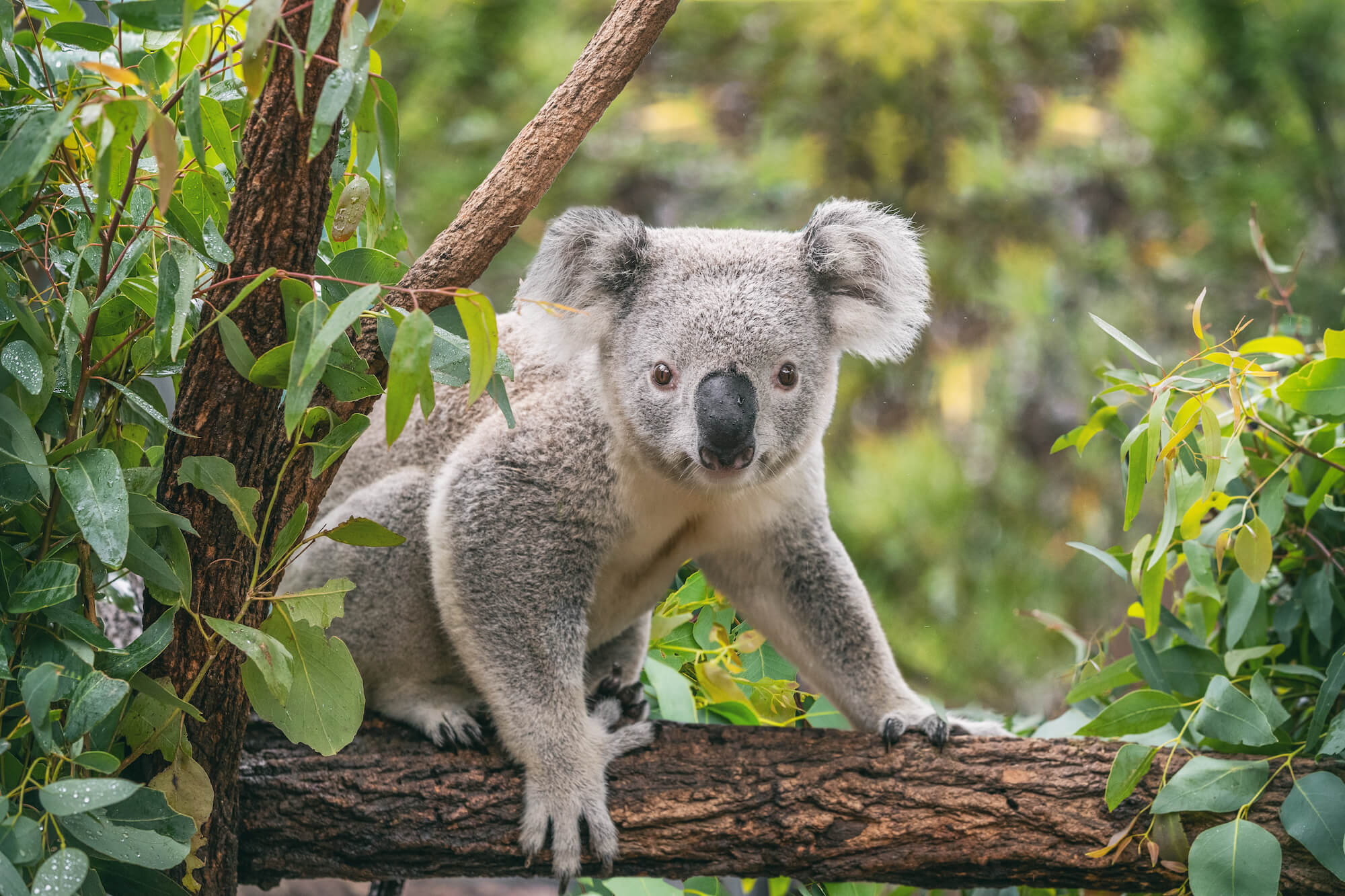
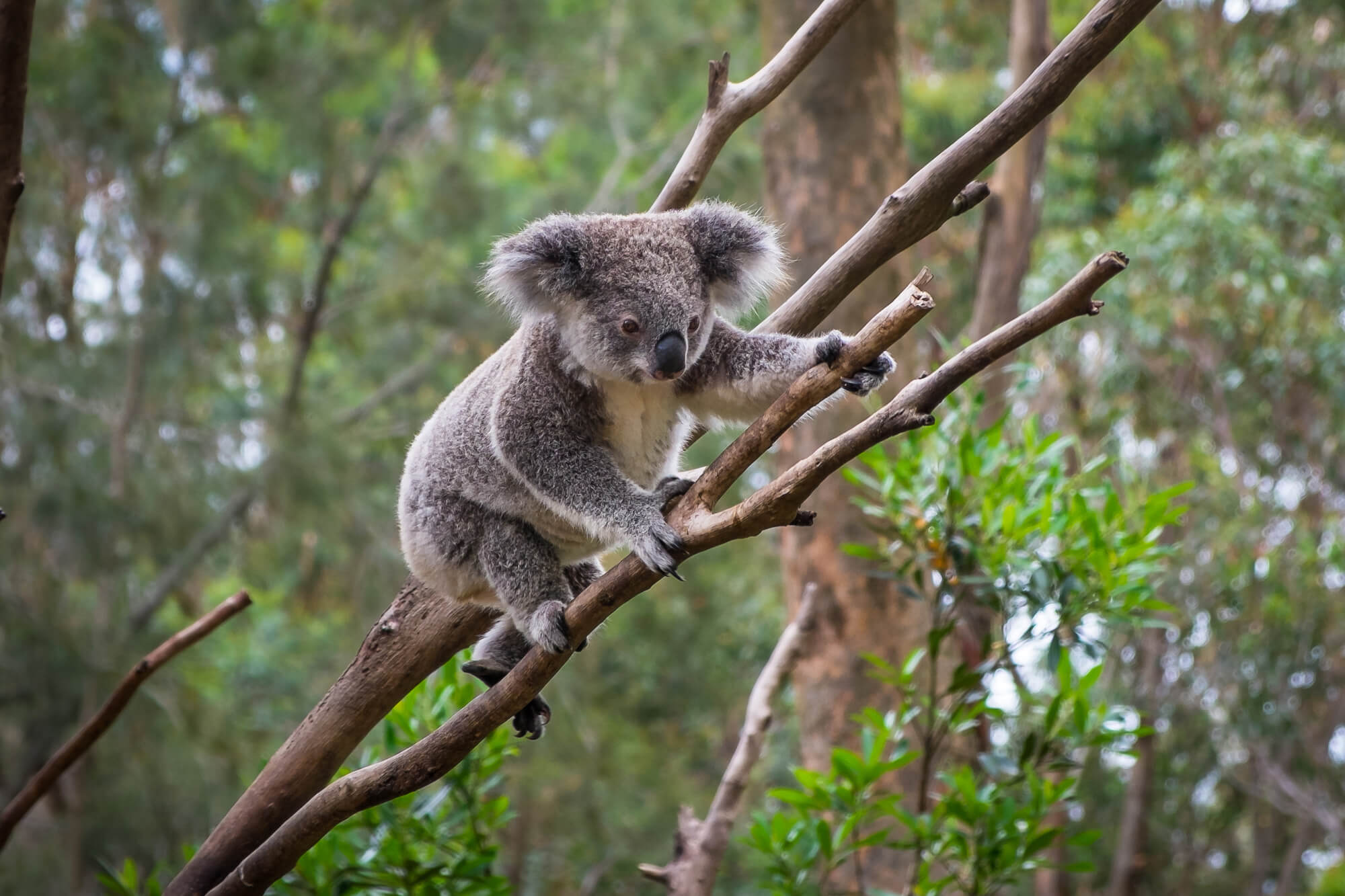
The koala (Phascolarctos cinereus) is an iconic marsupial native to Australia, often mistakenly called a “koala bear” due to its bear-like appearance. Koalas have a stout, tailless body covered in dense, woolly fur that can range in color from grey to brown. They have large, rounded ears with white hair on the edges, a prominent black nose, and sharp claws that are well-adapted for climbing trees. Adult koalas weigh between 9 and 33 pounds, with males generally larger than females.
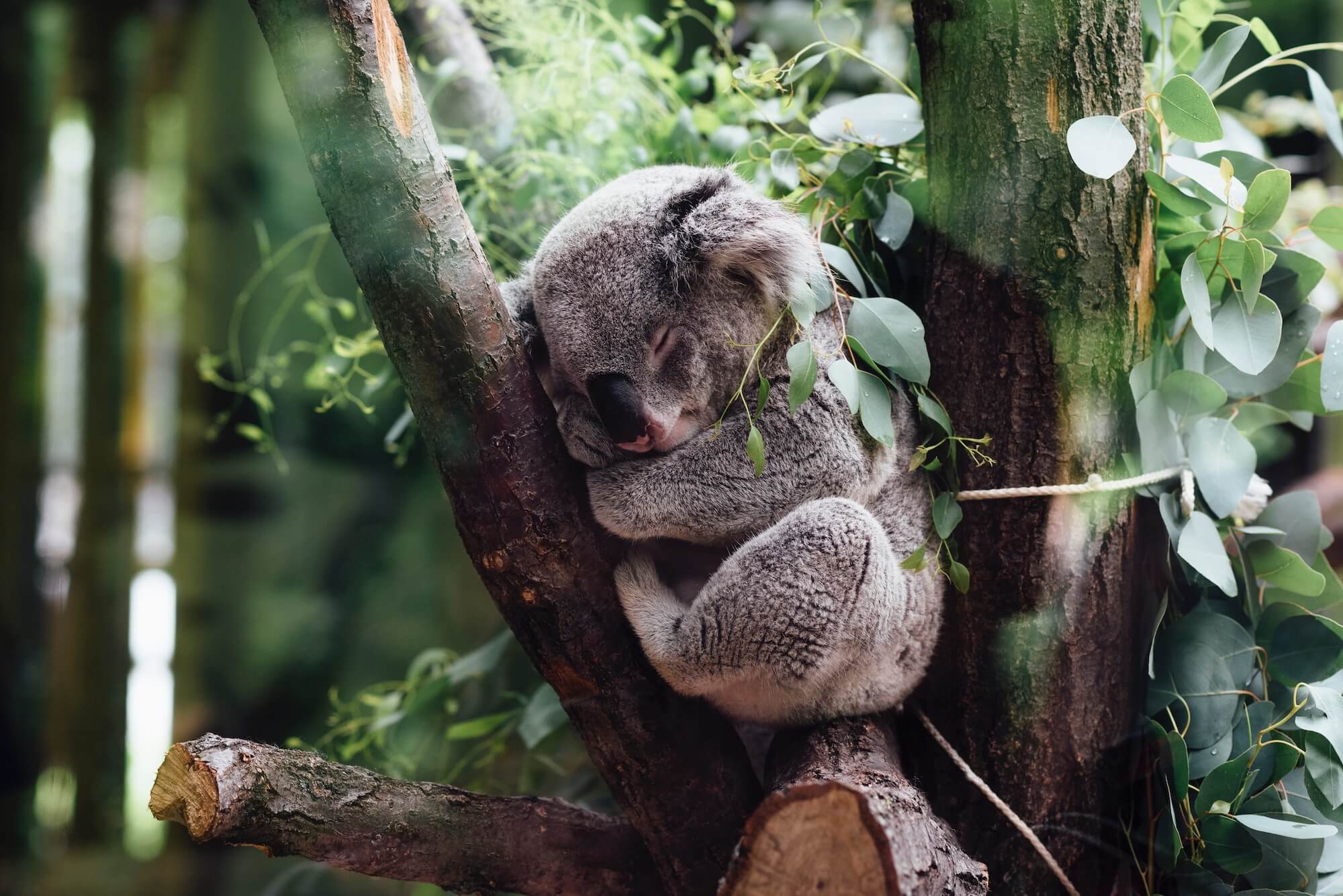
Koalas are arboreal, spending most of their lives in eucalyptus trees. Their diet consists almost exclusively of eucalyptus leaves, which are tough, fibrous, and low in nutrients. To digest these leaves, koalas have a specialized caecum and a slow metabolism, which is why they sleep between 18 and 22 hours a day. This extended sleep period helps them conserve energy. Despite their limited diet, koalas have strong preferences for certain types of eucalyptus and can be quite selective feeders.
Reproduction in koalas is seasonal, with most births occurring between October and May. Female koalas give birth to a single joey after a gestation period of about 35 days. The tiny, underdeveloped joey crawls into its mother’s pouch, where it continues to grow and develop for the next six months. After leaving the pouch, the joey rides on its mother’s back or belly for another six months, gradually learning to eat eucalyptus leaves.
Koalas are solitary animals, with each individual maintaining a home range that overlaps with those of others. They communicate through a range of vocalizations, including bellows, snores, and screams, which are most often heard during the breeding season. Habitat destruction, disease (such as chlamydia), and climate change pose significant threats to koala populations. Conservation efforts focus on habitat preservation, disease management, and legal protection. While koalas are currently listed as “Vulnerable” by the IUCN, they are a symbol of Australian wildlife and conservation efforts.